Dear Readers,
We are starting something new. From now on, we will be presenting five works of contemporary art and culture, highlighting a selected issue of current interest. Asking questions is an essential part of our job. It helps us get a better idea of what the cultural scene is working on and what other perspectives exist on topics that also occupy us.
For our first issue of fünf zu eins, we drew inspiration from the philosopher Hannah Arendt. We ask, how do you move on when the way seems blocked? These are not Arendt’s exact words, but they do acknowledge the basic idea of her important central work published in 1958, “The Human Condition” (German: “Vita activa oder Vom tätigen Leben”). Action means freedom. It represents the chance to begin something new and change something in the world under adverse circumstances.
Now more than ever, it seems worth revisiting this idea. What responsibility and what opportunities of agency do we as individuals and as a community have? Arendt argues that action can also mean staying engaged with others in open dialogue, challenging each other intellectually and cultivating the special relationship that results from that. From her perspective, we are always political actors of our time—even when our ability to shape the course of events appears limited.
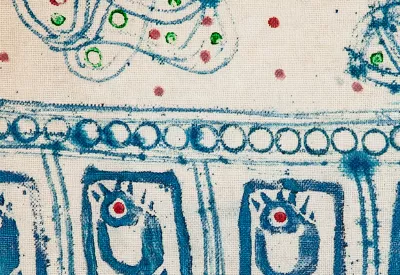
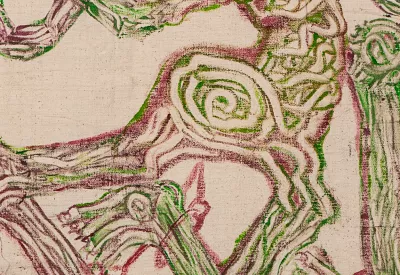
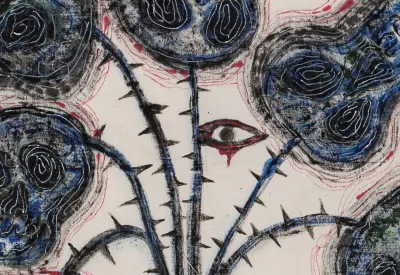
The artist Htein Lin found himself in an almost hopeless predicament in 1998 when he was arrested by Myanmar’s military regime and sentenced to seven years in prison. During his incarceration, he found ways, means and allies that helped him stay artistically active. In his dire situation, creating art with soap, fabrics and paints was a form of artistic empowerment.
In her audiovisual work, the filmmaker Susann Maria Hempel asks whether her profession as an artist can impact the future in view of climatic catastrophes, political upheavals and economic hardships. In her literary essay, Maxi Obexer reflects on the role that art and language play in existential and political crises, and how social engagement has changed her own artistic work. Right-wing populist campaigns and attacks on cultural institutions by right-wing extremists is the subject of an interview with the psychologist Tobias Rothmund. He describes the limits of dialogue—and where we can still hope to find common ground. And hope is also the focus of anthropologist Payal Arora’s essay. While many in Europe have come to regard social media as democratically corrosive, she continues to see them as rare spaces of self-realisation for people living in illiberal societies.
What can we learn from these five positions? Perhaps that many small changes are all it takes to delay the end of the world—for at least a time. On that note, let us all remain active participants.
Yours sincerely,
Katarzyna Wielga-Skolimowska
Kirsten Haß
Executive Board of the German Federal Cultural Foundation